
Norway's salmon farming industry almost collapsed in the early 1990s. Sea lice infestations。disease outbreaks, and escapee controversies had pushed the sector to a breaking point. Then a quiet shift occurred, driven not by a single company but by a network of engineers and biologists who believed the problem was structural. Aker, a name better known for oil rigs and shipbuilding, became an unlikely pivot point. Its contribution wasn't a miracle drug or a genetically modified fish—it was the industrialization of the smolt production cycle, the unglamorous upstream stage where young salmon are raised before transfer to sea pens.
Walk into a modern Aker-designed smolt facility in mid-Norway and the first thing you notice is the water. It's not seawater. It's filtered, temperature-controlled freshwater。recirculated through a labyrinth of biofilters and oxygen cones. The density of fish per cubic meter is carefully throttled by sensors that would look at home in a pharmaceutical plant. Aker's innovation here was not inventing recirculating aquaculture systems—those existed in university labs. It was making them reliable at industrial scale, with redundancy for every pump and a maintenance schedule that treats a failed valve as a potential catastrophe rather than an inconvenience. In 2018, a competitor's facility in Chile lost power for six hours and lost 1.2 million juvenile salmon. Aker's facilities, by design, run on dual power feeds and backup generators that kick in within twelve seconds. That kind of detail rarely makes headlines, but it's the difference between a viable supply chain and a house of cards.Critics of industrial aquaculture argue that intensified smolt production merely shifts environmental pressure upstream. Fair point. Aker's response has been to publish real-time water quality data from its facilities—ammonia。
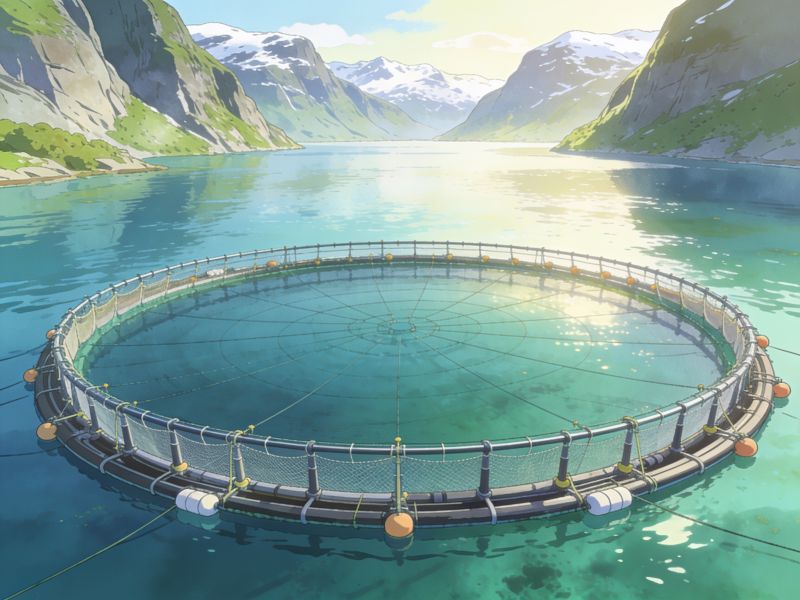
CO2, turbidity—on a public dashboard. Not every operator does this. I've seen smaller competitors quietly delete sensor logs after a mortality event. Aker's transparency isn't altruism;it's a defensive moat. If regulators trust your data stream, you get faster permitting. If NGOs can verify your claims, you avoid the boycotts that have plagued other seafood giants. It's a pragmatic wager that reputation compounds slowly and catastrophically reverses.The company's most consequential move, though, might be its offshore aquaculture platform. Imagine a floating ring forty meters in diameter, anchored in exposed coastal waters。with automated feeding and remote monitoring. Aker's version, tested off Trøndelag, uses a closed containment system to separate farmed fish from wild stocks entirely. Early trials show lower lice counts—not zero。but a 70% reduction compared to open net pens. The cost per kilogram is higher. No one denies that. But when you factor in the treatment costs for lice, the regulatory fines for escapes, and the price premium for 'low-impact' salmon in European supermarkets, the math starts to work. I'm skeptical of silver bullets in food production, yet this feels less like a bullet and more like a prosthetic limb—clumsy, expensive, but functional.What makes Aker worth watching isn't any single technology. It's the company's willingness to treat aquaculture like a systems engineering problem rather than a farming problem. Most salmon producers still think in terms of feed conversion ratios and harvest weights. Aker thinks in terms of failure modes, supply chain bottlenecks, and regulatory interfaces. That mindset doesn't guarantee success—the offshore platform could still flop, and smolt margins are thin. But it explains why Aker has quietly become a gatekeeper for the entire North Atlantic salmon value chain. You can't scale salmon farming in Norway。Scotland, or Canada without solving the juvenile fish bottleneck. And increasingly, that bottleneck runs through Aker's designed facilities. The company doesn't sell the salmon on your plate. It sells the conditions under which that salmon can exist at all.